Journal · 2026-10-08
Why Did My Brows Turn Orange, Red, or Blue?
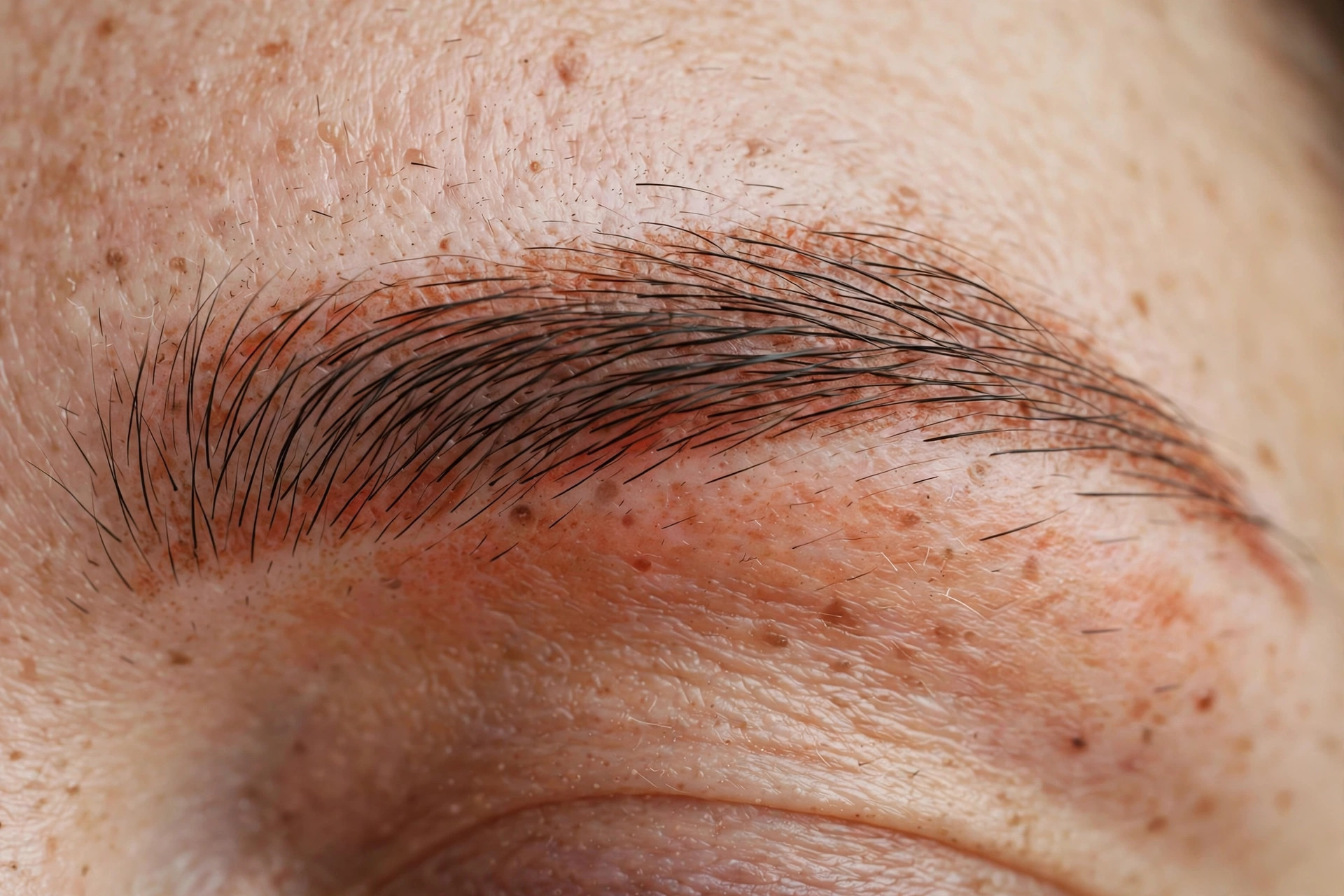
I get some version of this question almost every week: "My brows looked great for the first year, and now they are... orange?" Or gray. Or that unmistakable blue-gray that makes everyone think they got a bad tattoo. If you are looking in the mirror wondering what happened to your beautiful brown brows, take a breath — this is one of the most common things I see in consultations, and it is fixable far more often than people think. Here is what is actually going on under your skin.
Pigment changes color as it fades — that is physics, not failure
Here is the thing most clients never get told: permanent makeup is not one color. A brown brow pigment is a blend — usually iron oxides in warm reds, oranges, and yellows, plus cooler black and brown components. As your body breaks pigment down over time, those components do not fade at the same speed. The one that fades fastest leaves; the one that hangs on longest shows. That leftover color is what you see in the mirror.
This is why brows almost never fade evenly. One tone usually wins the race, and which one wins tells me exactly what was in your pigment and how your skin handled it. I can read old brows the way a mechanic reads an engine — the color shift is diagnostic.
Why brows turn orange or red
Warm tones are the survivors. The red and orange iron oxide components in most brown pigments are stubborn — they break down more slowly than the cooler components. As the black and gray fade away, the warm leftovers are all that remains, and your brows start reading salmon, orange, or reddish-brown.
This is especially common with sun exposure. UV light breaks down cooler pigment components faster, so brows that get a lot of direct sun tend to shift warm sooner. Oily skin can speed things up too, since active sebum and faster cell turnover metabolize pigment more quickly overall — your brows fade faster and the warm residue shows up earlier.
Why brows turn gray, blue, or ashy
This one has a specific culprit: titanium dioxide. It is the white pigment used to lighten pre-mixed brow colors, and it does not fade at the same rate as the brown around it. When the brown fades and the white stays behind, you get that ashy, gray, sometimes blue-ish cast. Some older pigments look almost blue because cool black components seen through skin take on a blue tint — the same reason veins look blue under skin.
Depth matters too. Pigment placed too deep reads cooler and bluer; pigment at the correct shallow depth heals warmer and truer. When I assess old work, a blue-gray cast usually tells me the original pigment had a lot of white in it, sat on the deep side, or both.
What speeds the shift up
Sun. Unprotected brows fade faster and shift warmer. A little SPF on your brows is the cheapest longevity trick in permanent makeup — it costs you five seconds in the morning.
Very oily skin. Faster turnover means faster fading, which means the color shift shows up on a shorter timeline. If your skin is oily, plan your touch-up sooner rather than later.
One-size-fits-all pre-mixed colors. This is the big one I control for. A pre-mixed "medium brown" straight out of the bottle was not designed for your undertone. On a warm undertone it can heal orange; on a cool one it can heal gray. Custom-mixed pigment — chosen against your actual skin — stays truer far longer than a bottle color.
How I pick pigment so your brows stay brown
During a consultation and brow mapping session, I look at your skin's undertone the same way I would match foundation — because it is the same physics. Warm undertones get a cooler pigment to balance them; cool undertones get a warmer one. The pigment and your skin meet in the middle and heal a true brown.
I also time the touch-up right. The first session fades gradually over 1 to 3 years; exact fading depends on the pigment, your skin, and aftercare, but nobody should wait until they are staring at orange or gray brows to come back. A refresh while the color is still a soft, even brown keeps the tone anchored — you are topping up the components that are fading, not correcting a color that has already shifted. Think of it as maintenance on the pigment before the physics runs its course.
If yours already shifted — here is what to do
Come in with bare brows and let me look. An orange or red shift is often the easiest to fix: a color-correcting shade neutralizes the warmth before the new brown goes in, and you are back to a clean slate in one visit. Gray-blue shifts are workable too, though they sometimes need warming first — every situation gets read on your face, not from a photo.
One honest caveat: if the old pigment is still dark and saturated, correction alone may not be enough — that is a different conversation, which I wrote about in our guide to correction vs. removal. But most color-shifted brows I see are faded enough to correct beautifully, and the relief on clients' faces when they realize their brows are not ruined is one of my favorite parts of the job.
Your brows were supposed to make your mornings easier, not give you a new thing to worry about in the mirror. If the color drifted, bring them to me — and next time, we will pick a pigment that stays brown. Read more about our approach on the powder brows page.
Quick answers
Why did my microblading turn orange?
The warm red and orange components of the pigment (iron oxides) fade more slowly than the cooler ones. As the black and gray fade away, the warm leftovers remain — often accelerated by sun exposure, which breaks down cool pigment components faster.
Why do old brows look blue or gray?
Usually titanium dioxide — the white pigment used to lighten pre-mixed brow colors — is left behind after the brown fades, giving an ashy or blue cast. Pigment placed too deep can also read blue through the skin.
Can color-shifted brows be fixed without removal?
Often yes. Orange or red shifts can usually be neutralized with a color-correcting shade before the new brown goes in, all in one visit. But the old pigment needs to be faded enough — dark, saturated old work may need fading or removal first.
How do I prevent my brows from changing color?
Protect them from the sun, book your touch-up before the color shifts rather than after, and choose an artist who custom-mixes pigment to your skin's undertone instead of using a pre-mixed bottle color.
Ready for easier mornings?
Start with a custom brow design and see your shape before you commit.