Journal · 2026-09-29
Nano Hairstroke Brows vs Microblading: What's Actually Different
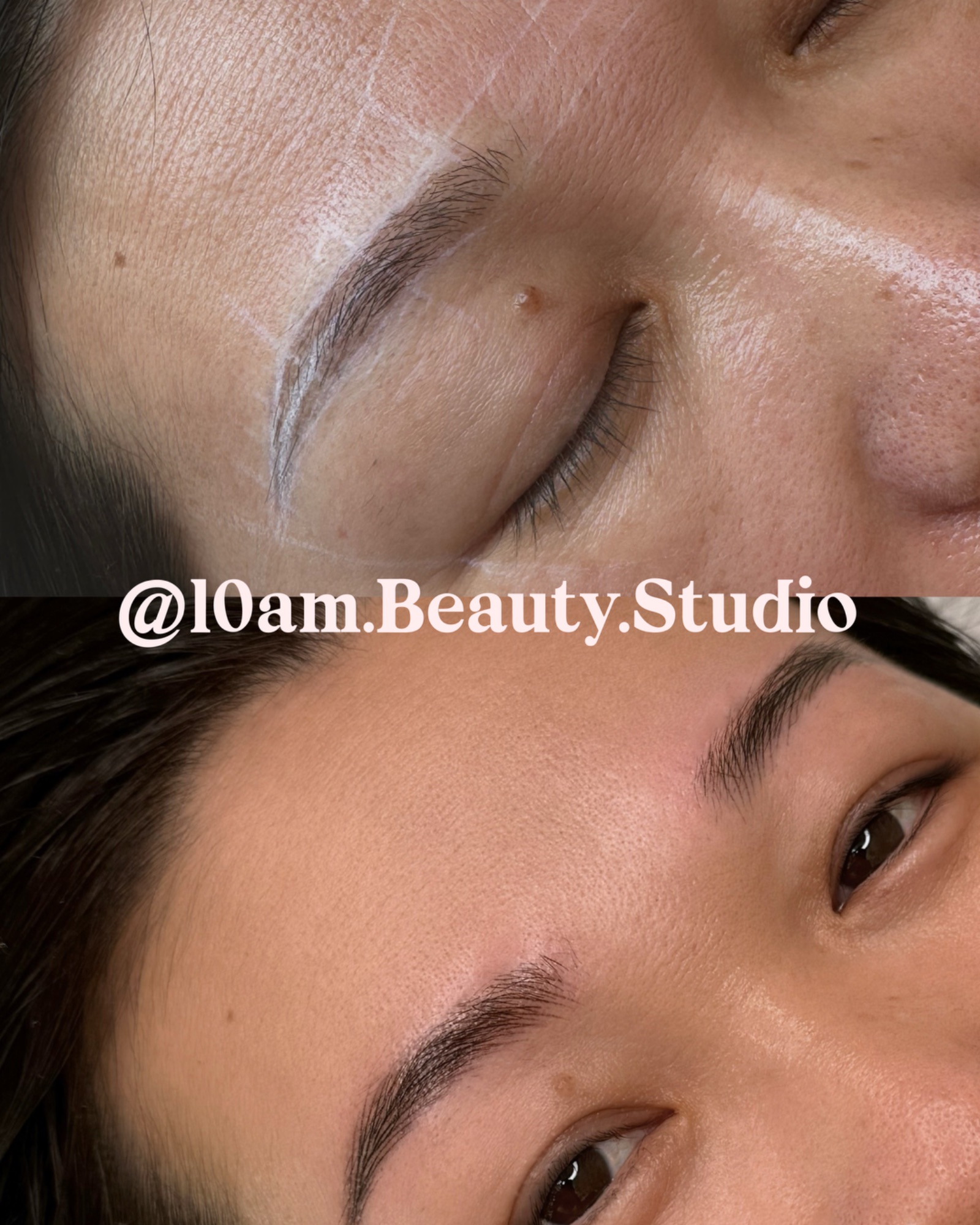 [NANO HAIRSTROKE BROWS, BEFORE / HEALED]
If you're researching brow tattooing, you've met both terms: microblading and nano brows (nano hairstrokes). They promise the same thing — brows that look like real hair. So what's actually different? The tool. Microblading uses a handheld blade to cut fine lines into the skin. Nano uses a single-needle machine to place each stroke. Everything that matters downstream — healing, retention, who each suits — follows from that one difference.
The short version
Same goal, different instrument. A blade slices; a machine needle stamps pigment in dot by dot with consistent depth. Neither is "better" in the abstract, but the machine's consistency is why nano heals more predictably — especially on oily skin, where microblading often blurs.
How the strokes are made
Microblading uses a manual hand tool: a row of tiny needles configured as a blade. The artist drags it through the skin to create each hair-stroke cut, then pigment is worked in. Depth control is entirely in the artist's hand — and hand pressure varies.
Nano hairstroke brows use a digital permanent makeup machine driving a single fine needle. Each stroke is built from tiny pixel-like deposits at a controlled depth. The machine doesn't get tired, and depth stays consistent across hundreds of strokes.
Healing: where they really diverge
A blade cut is more trauma than a needle deposit. More trauma means more variable healing: strokes can spread under the skin as it repairs, which is why microblading sometimes heals soft or blurry rather than crisp. There's also more risk of scarring with repeated microblading sessions over the years.
Nano's lower-trauma application heals crisper. Strokes stay where they were placed. The difference shows most on oily skin: oil + blade cuts is the classic recipe for strokes that blur within months. Nano's consistent depth holds up noticeably better there — which is why, when very oily-skinned clients ask us for microblading, we recommend nano instead.
How long does each last?
Roughly the same: 1–3 years depending on skin type, lifestyle, and aftercare. Nano doesn't necessarily last "longer" — but it tends to fade more evenly rather than blurring at the edges, so it looks better for more of its lifespan.
Pain, time, and cost
Both use topical numbing, and most clients find both very tolerable. A nano appointment runs longer — ours is about 4.5 hours — because every stroke is placed individually and the mapping is meticulous. Don't judge by speed; judge by healed photos.
On cost: be wary of comparing on price alone. What matters is the artist's healed portfolio, their touch-up policy, and pigment quality — not whether the number is $50 lower.
Can nano fix old microblading?
Sometimes. If your old microblading has faded significantly, nano strokes can often be worked in and around it. If it's still saturated, discolored (orange, grey, blue), or the skin is scarred, removal or color correction has to come first. Send us clear photos in daylight and we'll give you an honest answer — including when removal is the smarter first step.
The bottom line
If you want the hair-stroke look, nano gives you the same aesthetic with gentler application and more predictable healing. That's why, for stroke work, it's the only technique we offer. If you're torn between strokes and shading, our $15 brow mapping consultation includes an honest recommendation for your skin.
Quick answers
Which hurts less, nano or microblading?
Both use topical numbing and most clients find both very tolerable. The blade-vs-machine difference matters far more for healing than for pain.
Is nano better for oily skin?
Yes. Consistent needle depth plus less skin trauma means strokes stay crisper on oily skin, where microblading often blurs or fades quickly.
How long do nano hairstroke brows last compared to microblading?
Both last roughly 1–3 years. Nano tends to fade more evenly rather than blurring at the edges.
Can I switch from microblading to nano hairstroke brows?
If the old work has faded significantly, often yes. If it's saturated, discolored, or scarred, removal or correction comes first. Send us daylight photos for an honest assessment.
Ready for easier mornings?
Start with a custom brow design and see your shape before you commit.