Journal · 2026-10-15
How Long Do Powder Brows Last on Oily Skin?
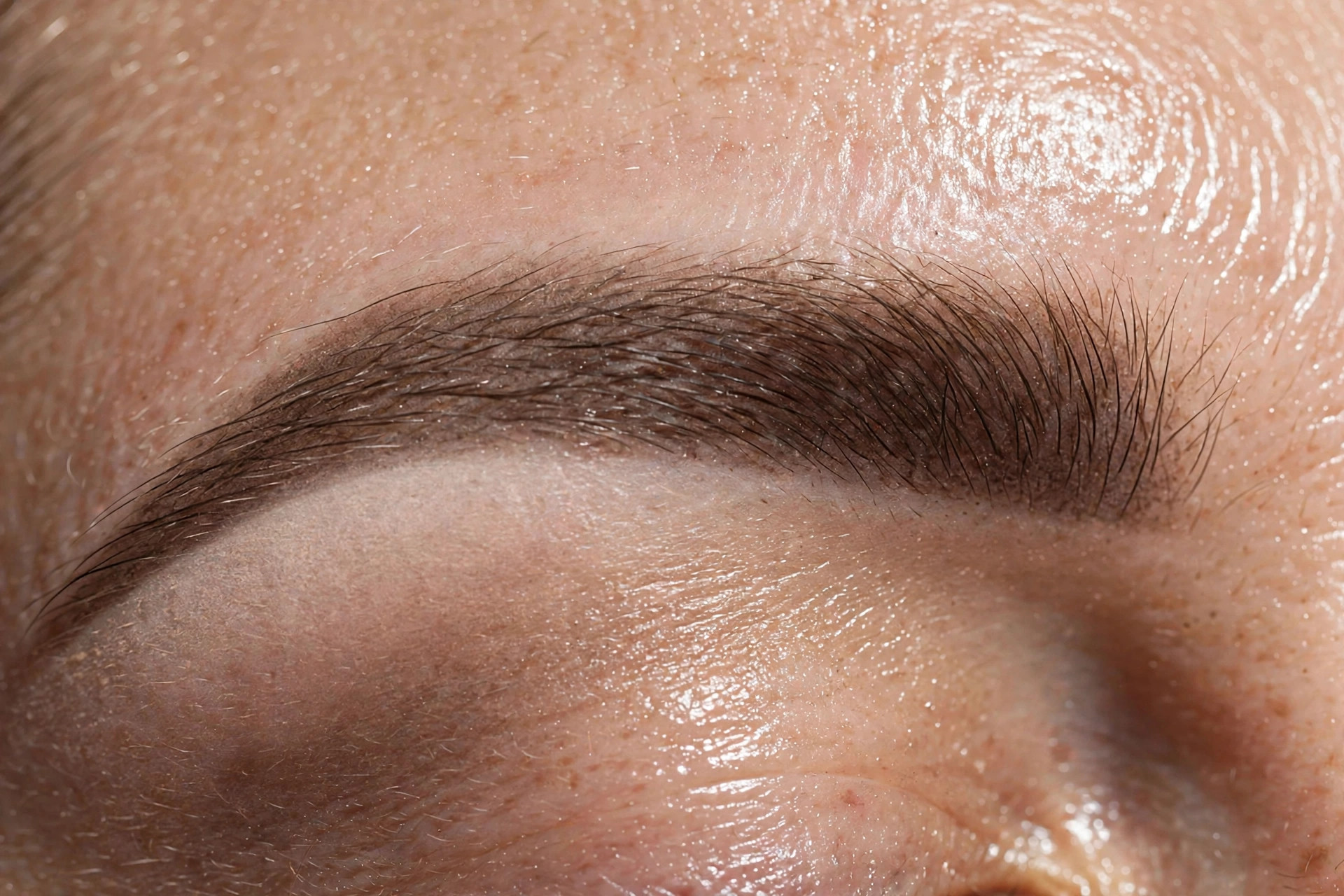
If you have oily skin, you have probably read the line every artist seems to repeat: "Oily skin? Get powder brows." I say it too. But I also know that answer leaves the real question untouched — how long do they actually last on you, and what makes them fade faster or slower? So let's talk about the part nobody writes about: the actual timeline of powder brows on oily skin, from the first week to the day you notice they are almost gone.
What oily skin does to pigment
Your skin produces sebum constantly, and the T-zone — forehead, nose, brows — is where the oil glands work hardest. After a brow tattoo heals, the pigment sits in the upper layers of the skin, and oil keeps pushing its way up from underneath. Think of it like ink on damp paper. It still lands, but the edges soften and the color lifts a little faster than it would on dry skin. This is not a quality problem and it is not your artist's fault. It is simply how oily skin behaves.
That behavior hits techniques unevenly. Fine hairstrokes — the ultra-thin lines that make nano brows look so natural — need sharp edges to read as individual hairs. On oily skin, those crisp edges blur sooner, and strokes that were distinct on day one can melt into a soft wash within a year. Powder shading, by contrast, is already a soft wash: thousands of tiny pixel dots layered into a gradient. When oil softens the edges of a powder brow, it looks like a powder brow. The technique hides exactly what oily skin does naturally.
Why powder shading is the oily-skin pick
This is why, during brow mapping and consultation, I assess your skin type before recommending anything. On oily or combination skin, powder shading heals more predictably and keeps its intended look longer. The layered dots hold enough density that the brow still reads well even as the top layers soften. Some clients with oily skin choose combo brows instead — strokes at the front, shading through the arch and tail — and that works too, as long as we agree up front that the stroked portion will need a refresh sooner than the shaded part.
A realistic timeline
Here is what most of my oily-skinned clients actually experience. Weeks one and two: dark, slightly crisp, mildly scary — completely normal. By week four, the color settles and the shape softens into its real healed result. Months three through nine are usually the golden period: even color, clean edges, effortless mornings.
Around the one-year mark, most oily skin has lightened the brow noticeably. The tails — the thinnest, most exposed part — go first. This is the point where a refresh keeps things looking fresh instead of letting them drift. And then the long fade: brow pigment fades gradually over 1 to 3 years; exact fading depends on the pigment, your skin, and aftercare, and oily skin tends to land on the shorter end of that range. Nothing here is permanent, and nothing should promise you permanence.
What speeds up the fade (and what slows it)
Oil is only one variable. Skincare products matter just as much: anything with acids, retinoids, or strong exfoliants that touches the brow area accelerates fading. I ask clients to pause retinol and acid products around the brows for a couple of weeks before and after the appointment — and if you use them long-term, keep them off the brow zone permanently if you want your color to last. Sun exposure is the other big one: UV breaks down pigment the same way it fades a tattoo. A hat or a dab of sunscreen on fully healed brows (never on a fresh tattoo) makes a real difference. And on the oily-skin side, gentle blotting through the day helps: less oil sitting on the skin means less oil pushing at the pigment.
The things that help are boring on purpose: keep heavy, greasy creams off the brows, skip facials that steam or scrub the brow zone, and don't pick at flaking during healing. If you are unsure whether your current routine will work against your brows, that is exactly the kind of question our 60-second brow quiz is built for — or bring the products to your consultation and we will sort it out together.
The touch-up rhythm that works
For oily skin, I talk about a refresh rhythm rather than a single finish line. Most clients come back for a touch-up about once a year — not because the brows look bad, but because a light refresh keeps them sitting in that golden period. The touch-up appointment is shorter than the first visit, and because your shape was already mapped and approved, it is mostly a color refresh. Some clients with drier skin stretch to 18 months; clients with very oily skin and heavy sun exposure sometimes prefer a yearly cadence. There is no grade here — it is just how your skin and your lifestyle add up.
The honest summary
Oily skin does not disqualify you from beautiful brows. It just points you toward the technique that plays to its strengths. Powder shading handles oil gracefully, heals predictably, and fades gradually over 1 to 3 years; exact fading depends on the pigment, your skin, and aftercare, with most oily-skinned clients settling into a yearly refresh rhythm. If your skin type has been making you hesitate, come talk it through in person. We map the shape, assess the skin, and you approve everything before anything permanent begins.
Quick answers
Do powder brows work on oily skin?
Yes — powder shading is the technique most artists recommend for oily or combination skin, because the soft gradient heals predictably even as oil softens the edges. Fine hairstroke techniques blur faster on oily skin, which is why oily-skinned clients are usually steered toward powder or combo brows.
Will my powder brows turn an odd color as they fade?
When brows fade unevenly, some clients notice warm or gray shifts as the pigment lightens. Quality pigment matched to your undertone fades gradually rather than going fully gray or orange; exact fading depends on the pigment and your skin, and a touch-up restores the intended color long before any shift becomes obvious.
Can I use retinol or exfoliating acids if I have powder brows?
Not on the brow area itself. Acids, retinoids, and strong exfoliants accelerate fading, so keep them off your brows permanently if you want your color to last — and pause them for a couple of weeks before and after your appointment.
How often will I need a touch-up with oily skin?
Most oily-skinned clients prefer a refresh roughly once a year to stay in the best-looking window. Very oily skin or heavy sun exposure can call for a slightly shorter rhythm, while less oily skin may stretch a bit longer.
Ready for easier mornings?
Start with a custom brow design and see your shape before you commit.