Journal · 2026-10-06
Old Microblading: Should You Correct It or Remove It?
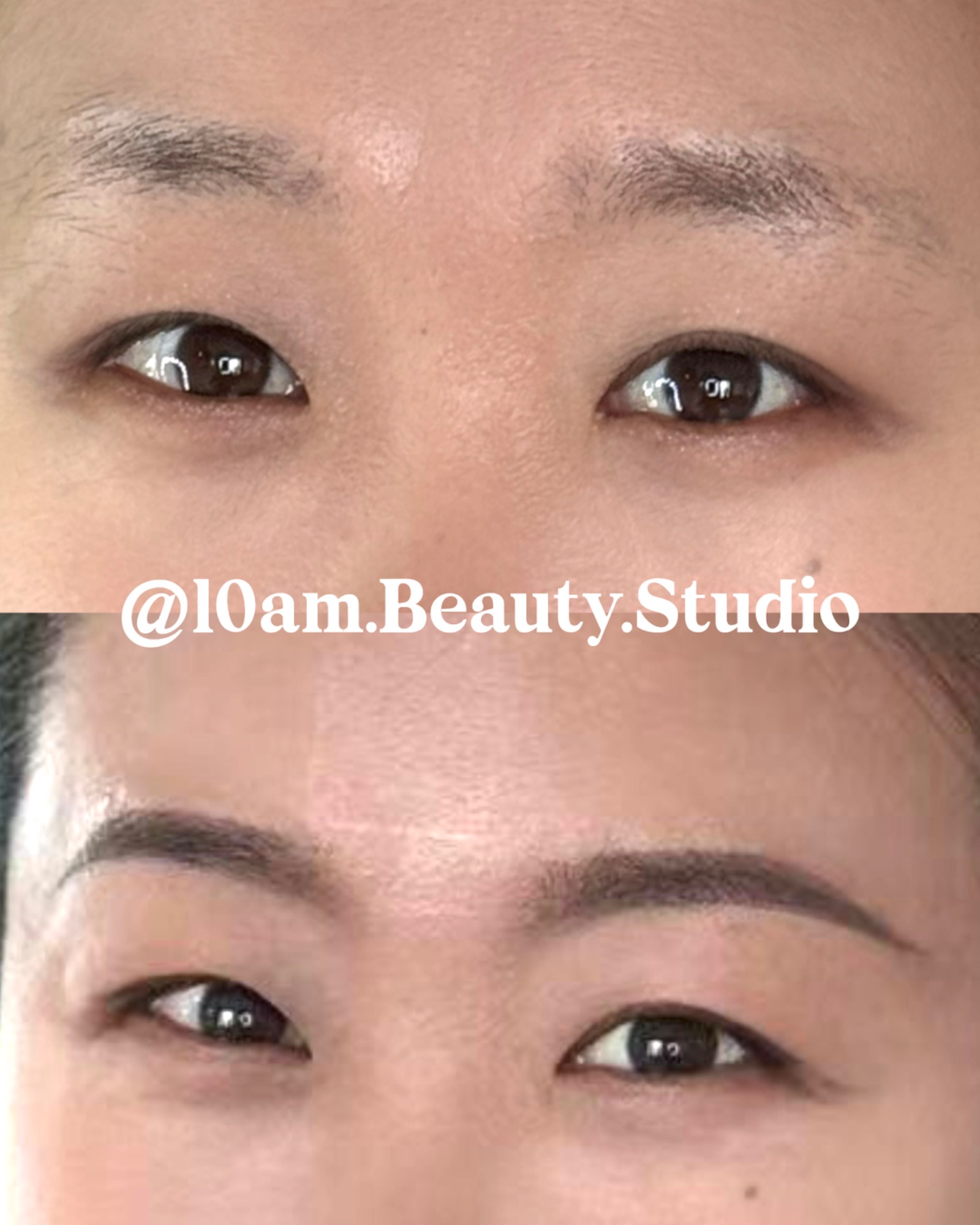 [POWDER BROWS, BEFORE / HEALED]
At least once a week, someone sits in my chair, pulls their hair back, and says, "Can you just go over my old microblading?" And I wish the answer were always yes. Sometimes it is — correction work is a real thing, and a faded, slightly-off set of brows can absolutely be rescued. But sometimes the kindest thing an artist can do is tell you that covering it up would make things worse, and that starting fresh is the move. Here is how I actually decide, so you can show up to your consultation already knowing which camp you are probably in.
The truth about covering old work
Permanent makeup is layering translucent pigment under the skin, not painting over a wall. That means whatever is underneath still shows through. When the old work is a soft, faded wash of color — light grayish-blue, or a faint salmon-orange ghost — new pigment can blend over it cleanly, and I can neutralize the undertone with a correcting shade before building your new shape on top.
But when the old brows are still dark and saturated, there is no pigment light enough to cancel them out. Adding new color on top of dense old color just makes mud: darker, muddier, harder to fix later. This is the part nobody wants to hear, but I would rather you hear it from me in a consultation than discover it on your face.
When correction works (and what it can actually do)
The color is faded 60 to 80 percent. If you can barely see the old work without makeup, that is the sweet spot. The remaining pigment becomes a light base I can work with.
The shape is close to right. Correction can soften, widen, or warm up an old shape — but it cannot shrink a brow that is too thick, or erase tails that extend past your natural brow bone. Making a brow smaller is the one thing pigment cannot do.
The skin underneath is healthy. Old microblading was often done with more trauma than modern techniques. If the skin is visibly scarred or the old strokes healed raised, new pigment will not sit evenly. I check this in person, with my fingers, not just my eyes.
What correction can deliver: an evened-out color and a softened shape that looks intentional again. What it cannot deliver: making dark old pigment disappear. If you want the old work gone, that is removal, not correction.
When removal is the honest answer
The brows are still dark and saturated. If I can see the full shape clearly on your bare face, we need to lighten it before any new work — at minimum.
The shape is fundamentally wrong. Tails that droop, heads that start too close together, brows sitting too low on your face. New pigment cannot cover a shape that is outside where the new design needs to go.
There are multiple old layers. Microblading over microblading over microblading, each in a slightly different shape — the skin is saturated, and layering again is how you get that heavy, stamped look.
Two real options exist: laser removal and saline or glycolic removal. Laser breaks down dense pigment fastest, but it has to be done by a licensed laser provider or dermatologist — be skeptical of anyone offering it alongside brow services without proper licensing. Saline removal lifts pigment to the surface over a series of sessions and can be done by trained PMU artists. Both need healing time between sessions, and neither is instant — plan on months, not weeks, and only book new brows once the old pigment is actually light enough to work over.
How I assess it at your consultation
This is exactly what a consultation and brow mapping session is for. Come with clean, bare brows — no pencil, no powder, no concealer over them. I will look at the color, the saturation, the shape, and the skin texture, and then I will map your ideal brow shape on your face so you can see where new pigment would go and whether the old work fits inside it.
One thing I am strict about: I will not agree to cover something I do not believe will heal well. It is tempting for an artist to take the booking — it is your money and your face, after all — but I have seen too many cover-ups become corrections of corrections. If I tell you the old work needs to fade more first, or go through a round of removal, that is me protecting your result, not turning you away.
Three things to know before you book anything
Waiting is also an option. Old microblading does keep fading on its own — it fades gradually over 1 to 3 years; exact fading depends on the pigment, your skin, and aftercare, sometimes longer for very dense work. If the old brows are light enough to cover with makeup but not yet light enough for new pigment, a little patience plus a touch-up later beats a rushed cover-up now.
Color-correcting is not color-erasing. An orange brow can be neutralized to a soft brown, a gray one warmed up — but that adds pigment. Every correction leaves you with more pigment in the skin than you started with, which is worth considering if you might want removal later.
Get the removal consult separate from the PMU artist. If removal is on the table, talk to the removal provider directly about sessions, healing, and cost before committing to anything. A good PMU artist will happily wait — I would rather start your new brows on a clean canvas in three months than fight old pigment tomorrow.
If you have old work you are unsure about, bring it to me. The $15 mapping session includes an honest assessment — and if the honest answer is "not yet," I will tell you exactly what "yet" looks like. More on our approach on the powder brows and nano brows pages, or start with our 60-second brow quiz.
Quick answers
Can old microblading be covered with powder brows?
Sometimes — powder shading is the most forgiving technique for going over old work, since it can even out a faded base. But it only works if the old pigment is light and faded enough. Dark, saturated old brows need fading or removal first; otherwise the new work will look muddy.
How do I know if my old brows are faded enough for correction?
A rough rule: if you can barely see the old work on your bare face without makeup, it is usually workable. If the full shape is still clearly visible, it is probably too saturated to cover cleanly. The real answer comes from an in-person assessment of color, saturation, and skin texture.
My old brows turned orange. Is that fixable?
Orange or salmon undertones are actually one of the more correctable situations — a correcting shade can neutralize the warmth before the new color goes in. But this adds pigment to the skin, so if the old shape is also wrong or too dark, removal may still be the better long-term move.
How long does laser removal take before I can get new brows?
It depends on the pigment density, color, and depth — only the laser provider can give you a real estimate after seeing your brows. Expect a series of sessions with weeks of healing between each, so plan on months rather than weeks before starting fresh.
Ready for easier mornings?
Start with a custom brow design and see your shape before you commit.